
About Smithys Cottage
During its renovation we kept as much of the original cottage as possible and uncovered many features that had been hidden for years.
17th Century Cottage
Until the early 1900s it had been the home of the local blacksmith for several hundred years – the forge was next door and is now converted to a house – the cottage still retains much of its old period charm:
– large oak beam fireplace with a cast iron open fire.
– thick limestone walls with deep recessed windows
– walls that slope outwards downstairs and inwards upstairs and hardly a “right angle” in the house to be found!

Modern Facilities
Even though the cottage is several hundred years old it now has all the comforts of modern living which include:-
– Gas central heating
– 1 double bedroom (full length bed x 4′ 6″ wide)
– 1 single bedroom (full length bed x 2′ 6″ wide)
– Rayburn open cast iron fire (logs and coal)
– Fully fitted kitchen
– Internet WiFi throughout cottage
– 22″ flatscreen TV with catchup facility & DVD
– Modern bathroom suite (fitted January 2025)
– Interlinked smoke and CO alarms.
– A small library of walks & local interest books.
– Mobile phone reception.
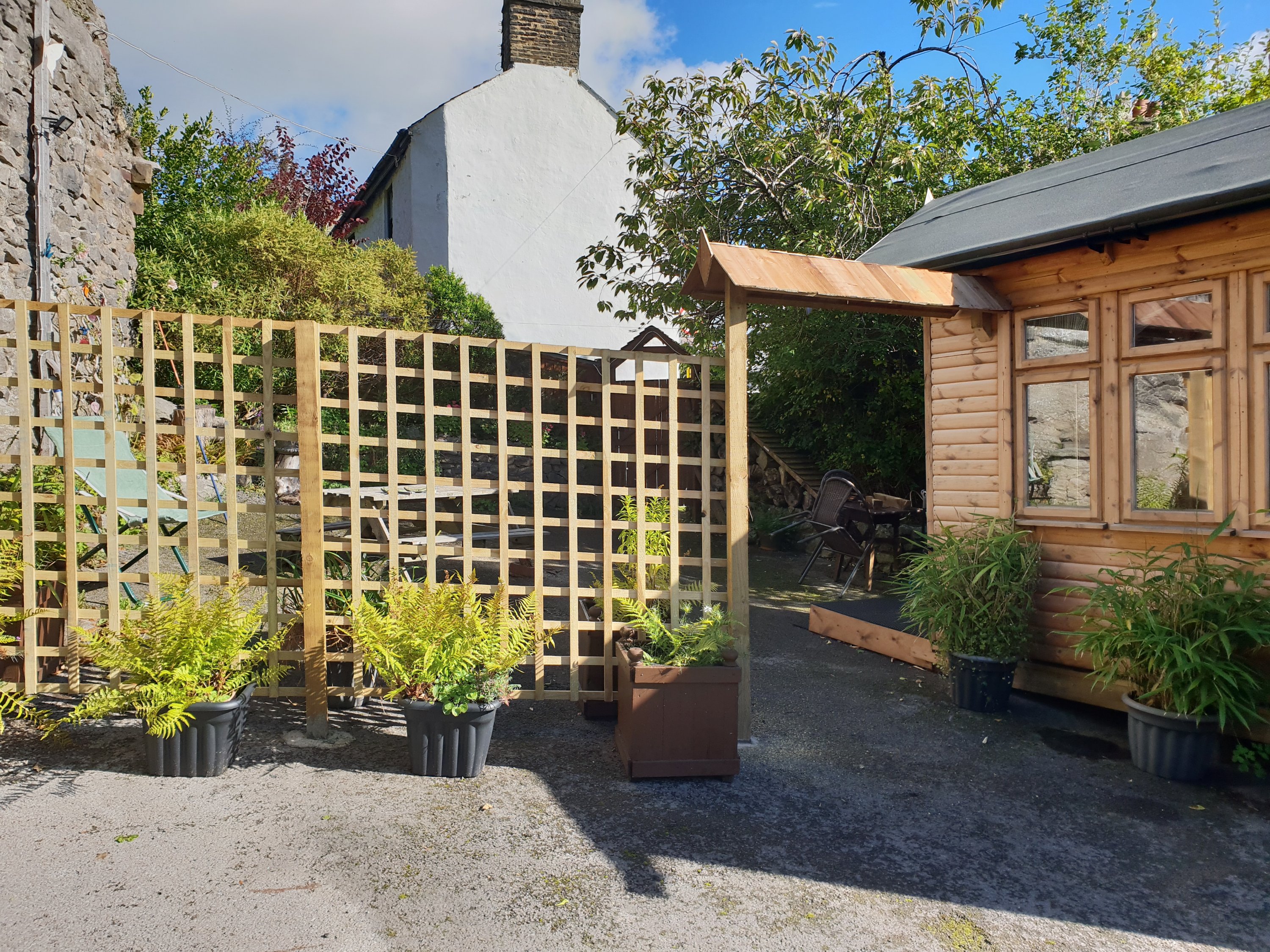
– Outdoor seating and garden room

There is a large private parking area (for 2 cars) with seating which is adjacent to the cottage. So you can sit out and in good weather can be quite a suntrap to enjoy a drink and even eat your food out there.
The road outside the cottage is low traffic and access only.
There is internet WiFi in the cottage for emails and general browsing.
History
The exact date when the house was built is not certain but there are several indicators to the period:-
– the method of construction with the inner and outer limestone walls and a cavity in the centre filled with rubble – keeps the house nice and cool in summer and cosy and warm in winter.
– the construction is very similar to the local church of St.Anne’s which is constructed in a similar way and built in 1625.
– references in the library suggests that these houses are some of the oldest houses in Buxton and may even pre-date St.Anne’s church
 We know from the deeds that when the house was handed over to it’s tenants (from the estate of the Duke of Devonshire).
No doubt when the house was built it was on the edge of Buxton “village” with views of green fields and hills – which have now been replaced with early Victorian houses built for local workersthe wealthy traders that commuted to Manchester on the train.
The cottage is located in one of the oldest parts of Buxton. Many features of the original era remain with the old cobblestone footpath that runs around the side and behind the house.


When the cottage was upgraded (not renovated as in a total rebuild) we removed 5 fireplaces to reach the original charred limestone firewall, a lot of the plaster on the inside walls (made with ash and horsehair) probably originated from an earlier Victorian “upgrade” and in places covered in nearly an inch thick accumulation of layers of paint!!
We travel from our home in Nottingham and do all change-overs ourselves guaranteeing the highest standards of cleanliness which is reflected on the comments left in our Guest Book.

The cottage is left with general cleaning materials, washing up liquids, tea towels, and hand towels for the kitchen and bathroom but we don’t leave bath towels.
 Smithys Cottage, Buxton, Peak District